
 (888) 229-7989
 Client Portal
How to Qualify for Social Security Disability Benefits With a Mental Illness
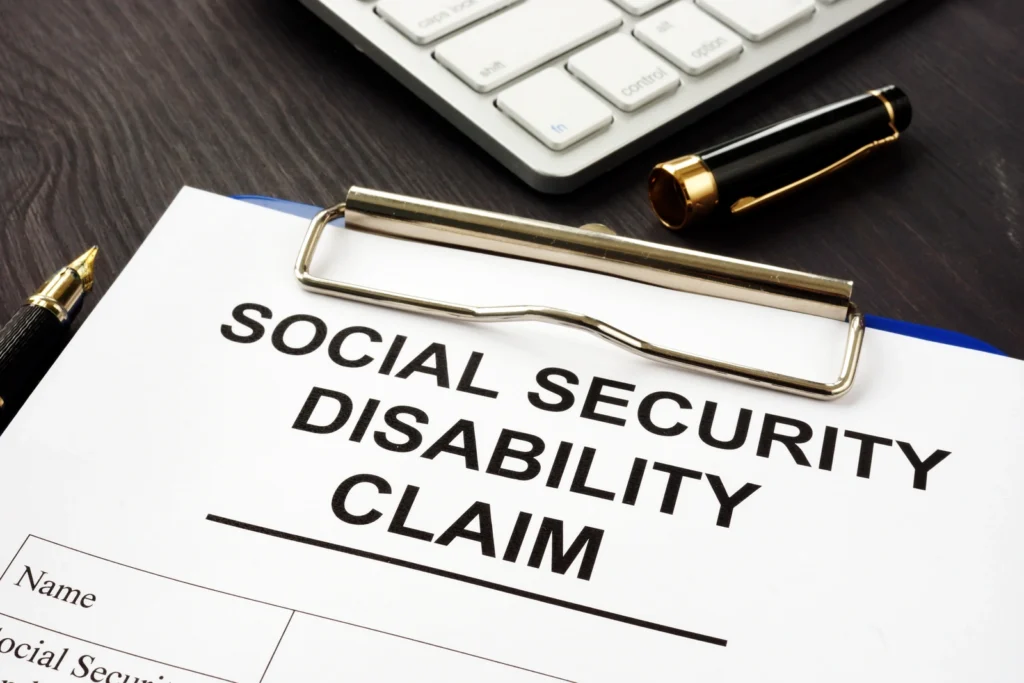


Many people living with a mental illness find it extremely difficult to go to work because their symptoms cause problems with attention, memory, stress, attendance, communication, and ability to complete daily tasks. In fact, for many people with this level of impairment, it makes full-time employment almost impossible.
But for many, Social Security benefits can help. You may be eligible for Social Security disability payments when your mental health issue keeps you from performing substantial work, and your condition is likely to last for at least 12 months or lead to death.[1]
While getting approved for Social Security disability payments for mental health is possible, approval is contingent on providing documentation that illustrates how the condition impacts your capacity to function and work long-term. If you’re considering filing an application, it can be helpful to understand what Social Security looks for, what records you need, and what alternative paths of eligibility are available for when a mental health condition doesn’t fit into an exact Blue Book listing.
SSDI vs. SSI for Mental Illness
The two major federal disability programs available to people with disabilities are Social Security Disability Insurance (SSDI) and Supplemental Security Income (SSI).
SSDI is based on a person’s history of paying Social Security taxes through their earnings while employed.
SSI is based on a person’s income and resources. People with very little income and resources can apply for SSI.
Depending on a person’s employment history, current income, and resources, they may be eligible for either SSDI or SSI, or possibly both.
Qualifying for Disability Benefits
To determine which mental health disorders qualify as disabilities under the Social Security Act, there are specific impairments listed in the Blue Book. Section 12.00 of the Blue Book is used to evaluate all adult mental disorders.[2]
These listings include:
- Neurocognitive disorders
- Schizophrenia spectrum and other psychotic disorders
- Depressive, bipolar, and related disorders
- Intellectual disorder
- Anxiety and obsessive-compulsive disorders
- Somatic symptom and related disorders
- Personality and impulse-control disorders
- Autism spectrum disorder
- Neurodevelopmental disorders
- Eating disorders
- Trauma- and stressor-related disorders
To qualify under these sections of the Blue Book for a mental disorder, the applicant must provide documentation that meets Social Security Administration (SSA) standards. For many of the adult mental health listings in the Blue Book, the evaluation by Social Security will examine four categories of mental functioning:
- Understanding, remembering, or applying information
- Interacting with others
- Concentrating, persisting, or maintaining pace
- Adapting or managing oneself
Documentation that demonstrates an extreme limitation in one category or marked limitations in two categories must be provided to meet many of these listings.[3] Some listings may also consider whether the disorder has lasted at least two years and whether treatment, therapy, psychosocial support, or a highly structured setting helps reduce symptoms.
Medical Evidence for a Mental Health Claim
Documentation you provide to support your claim should contain as much detail as possible about your diagnosis, symptoms experienced, treatments received, and functional limitations.
Some examples of medical documentation that could be used as supporting evidence for a mental illness claim include:
- Psychiatric evaluations
- Therapy or counseling notes
- Medication regimen and associated side effects
- Hospitalization or crisis records
- Psychological testing results
- Treatment plan documents and progress notes
- Statements by treating physician or counselor about limitations related to employment
- Records indicating periods of lost time at work due to mental illness, reduced work hours, or inability to function normally.
Social Security may also take into account written testimony from family members, caregivers, employers or supervisors, case managers, or social workers who are familiar with the way in which the applicant’s mental illness impacts their day-to-day activities. But while these testimonials can serve as valuable evidence, they will not take the place of the required medical evidence. However, they can provide context and clarify the applicant’s symptoms in their everyday environment.
When documenting your limitations, please try to be as specific as possible. For example, instead of saying, “I have depression,” you would want to specify how the depression symptoms affect your daily routine, such as the impact on your sleep patterns, hygiene practices, short-term or long-term memory issues, ability to perform assigned tasks, and ability to deal with stress. Instead of saying, “I feel anxious most of the day,” you would want to describe how the anxiety limits your ability to participate in normal day-to-day activities, such as panic attacks, social withdrawal, excessive worry, racing thoughts, irritability, or fear, which prevents you from leaving the house, communicating effectively, or maintaining consistent work performance.
Medical-Vocational Allowance
If you have a mental illness that renders you unable to engage in gainful employment, but you do not meet all the criteria listed in the Blue Book, you may still be able to receive a medical-vocational allowance.
Many people find themselves in this situation. Social Security will evaluate your application using your residual functional capacity (RFC), which is a measure of what you can physically and mentally accomplish while dealing with your medical condition.[4] For those with mental illnesses such as depression, bipolar disorder, post-traumatic stress disorder (PTSD), and others, the RFC will assess your capability to follow directions or instructions, pay attention and maintain focus, complete assigned tasks or duties, comply with supervisory guidance, cooperate with coworkers or the public, tolerate stressful environments, attend work regularly, and adjust to changing assignments or expectations.
Once Social Security evaluates your RFC along with your medical record evidence, work history, age, education level, and skill set, they will determine whether you are capable of performing your previous job duties or adjusting to new jobs. If Social Security determines there is no work available in the economy that you can reasonably perform given your physical and mental limitations, then you may be entitled to disability benefits.
A letter or report from a psychiatrist or mental health professional can help if it provides details about the frequency and severity of your symptoms, what triggers them, what treatments have been effective or ineffective, what side effects you have experienced, and why full-time work is not feasible for you.
2026 Work and Eligibility Rules
As of January 2026, Social Security defines substantial gainful activity (SGA) as gross monthly earnings of $1,690 or more for non-blind workers and $2,830 or more for blind workers.[5]
If you earn above these amounts, Social Security may determine you are not disabled according to its definitions, although there may be some exceptions.
SSDI typically requires that applicants possess sufficient work credits based on their age and work history. As of 2026, one credit is awarded for every $1,890 in covered wages paid during a calendar year, and a maximum of 4 credits can be awarded annually.[6]
Unlike SSDI, SSI awards are based on eligibility due to disability status, age or blindness, and income and resource limitations. People with significant disabilities may qualify for SSI regardless of their recent work history.[7]
Filing Your Claim
Disability claims can be submitted online through Social Security. The SSA also provides an Adult Disability Starter Kit for people preparing for their disability interview and gathering all necessary information before submitting their claim.
Before filing a claim, please make sure you have gathered the following:
- Names of your doctors, therapists, clinics, and hospitals
- Dates of each visit or treatment
- Names of medications and side effects
- Copies of test results or evaluations
- Employment history
- Education history
- Dates you stopped working or reduced your hours
- Other benefits you receive, such as workers’ compensation
- Contact information for someone familiar with your condition, such as a friend or family member
If you need help filling out paperwork or submitting documents, consider calling Social Security directly or contacting your local Social Security office. Please keep copies of all paperwork and forms submitted to Social Security.
Most people receive a disability determination in approximately 6 to 8 months from the date of application, though that time frame can vary based on numerous factors, including location, the amount of medical documentation provided, and whether additional documentation is required.[8]
If the SSA determines there is insufficient medical documentation to make a decision about disability benefits, Disability Determination Services (DDS) will provide a consultative examination by a qualified medical provider at no charge to the applicant. If you are scheduled for a DDS exam, please plan accordingly and do not miss your appointment. Failure to comply with SSA’s requests for information or documentation can cause delays in processing your claim or potential denial of your claim.
Mental Health Treatment and Disability Claims
It is important to continue receiving treatment for your mental health condition whenever possible. Continuing treatment helps establish that your symptoms are present continuously and demonstrates your efforts to treat and manage your condition. If you stopped treatment due to financial constraints, difficulty accessing transportation, lack of access to services, or symptoms that prevented you from attending appointments, please disclose this information in your application.
Many people seeking disability due to mental illness also have histories of substance use, traumatic events, chronic pain, and co-occurring medical issues. It is essential to accurately report your complete medical history. The SSA evaluates all documentation submitted by applicants and may determine whether substance use has impacted your eligibility for disability.
Receiving treatment for your mental health issues may also help with overall stability regardless of the outcome of your claim.
At SOBA New Jersey, we understand how overwhelming mental illness, addiction, and daily functioning struggles can become. If mental health symptoms or substance use are affecting your ability to work, maintain relationships, or care for yourself, contact us today to learn more about treatment options.
There is a Better Way to Live. It’s Time to Get the Help You Deserve.
Take the first step in getting your life back. Speak with our admissions team today.
Soba NJ’s Editorial Guidelines
Like any policy, an editorial policy sets forth a standard for all content produced by Soba NJ. By measuring all content, educational materials, and curricula against this standard, we can ensure that all resources are prepared to meet or exceed our high standards for accuracy, relevance, and integrity. We’re committed to upholding this standard by adhering to three primary objectives when creating all resources.