Drug and Alcohol Interventions and Rehab at SOBA New Jersey

Drug & Alcohol Intervention Services Helping Families Take the First Step Toward Recovery

Compassionate support for families who need help starting the conversation about addiction treatment

Compassionate support for families who need help starting the conversation about addiction treatment

Watching someone you love struggling with alcohol addiction, drug addiction, or misuse of substances can be scary and exhausting. You’ve talked to them, set limits, offered help, and waited for them to decide they are ready. Conversations keep ending in denial, conflict, or broken promises. If this describes your situation, it might be time to try a more structured approach.

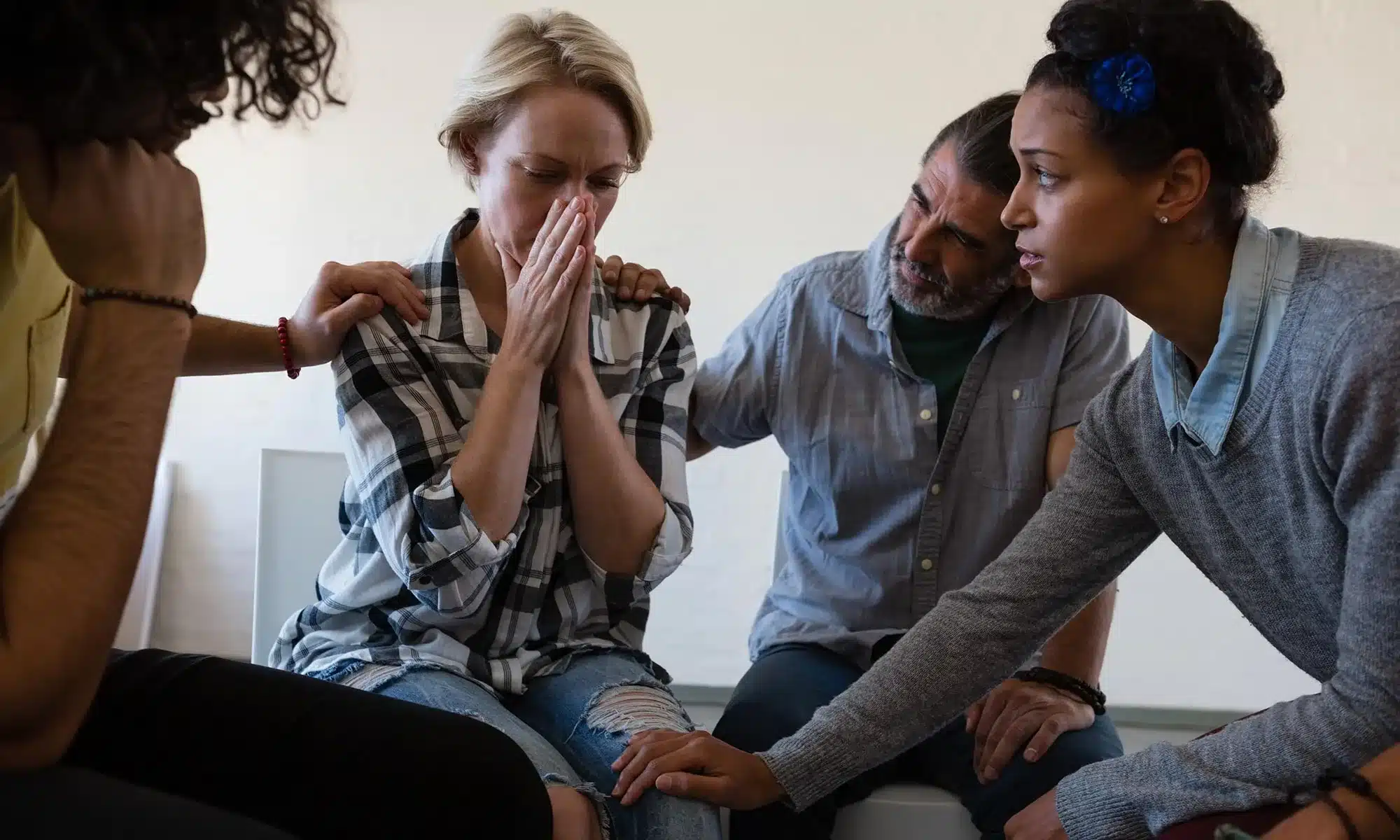
An intervention gives families a clear and compassionate way to talk to their loved one about addiction and to provide immediate help right away. SOBA New Jersey helps families plan alcohol and drug interventions for substances like stimulants, opioids, and prescription drugs. The goal is not to shame, blame, or force someone into recovery. It’s to conduct a calm and organized conversation that helps loved ones understand addiction’s impact and accept a real path into treatment.

What Is an Intervention?

An intervention is a planned conversation between someone struggling with addiction and the people who care about them.[1] It may include family members, close friends, interventionists, social workers, or addiction specialists. During the meeting, loved ones share specific worries, explain how substance use has affected the family, and present a treatment option for them to immediately follow.

Addiction is a treatable condition that impacts brain function and behavior, and effective care should be matched to the person’s needs, substance use history, withdrawal risks, and mental health concerns.[2] That is why an intervention should go beyond appeals based on emotion; it should offer a clear next step, such as detox, residential treatment, outpatient care, family therapy, sober living, or aftercare support.

Intervention services can clear up confusion and conflicting messages. Rather than each family member reacting individually, everyone focuses on one clear message: we love you, we care, and help is available for you now.


Signs Your Loved One Needs an Intervention

Families often intervene when substance use continues despite serious consequences.

Warning signs might include:

  • Repeated unsuccessful attempts to stop substance use
  • Worsening health
  • Withdrawal symptoms
  • Neglect of responsibilities
  • Legal or financial troubles
  • Risky or secretive behavior
  • Multiple relapses

Intervention can also be useful if someone close recognizes the problem but keeps putting off treatment. Many people feel fear, shame, or ambivalence about entering treatment. Motivation can change quickly, so treatment should be ready when the person is ready to accept help.[3]

You don’t have to wait for a crisis to act. If your loved one’s drinking problem, drug use pattern, or relapse is affecting safety, health, relationships, or future, SOBA New Jersey can help your family understand what comes next.

If someone close to you is having an emergency overdose, seizures, severe withdrawal symptoms, thoughts of suicide, or confusion, call 911 immediately or seek emergency care.

How a Drug or Alcohol Intervention Works

The actual intervention begins once all the groundwork has been laid. While many families are eager to get everyone together and express themselves, without planning and guidance there is little chance that this will result in anything meaningful.

A professional interventionist can help guide your family through preparing for the intervention, deciding who to invite, what to say, and determining a course of treatment. Preparing for the intervention allows you to focus on providing a productive and respectful conversation and then taking action.

Here are the basic steps for conducting an alcohol or drug intervention:

Family icon

Family preparation

Talking about the person’s alcoholism, drug addiction, or mental health issues, past relapses, and potential risks for their well-being

Health icon

Treatment planning

Determining the best place for them to start, whether that’s detox, residential treatment, partial hospitalization program (PHP), intensive outpatient program (IOP), or another support.

2 persons icon

A structured conversation

Provide each family member with the opportunity to clearly state their concerns related to the loved one’s drug or alcohol addiction without blaming or name-calling

gear wheel icon

Immediate next steps

Offer a direct treatment option and allow the person to easily enter care

Healthcare icon

Healthy boundaries

Helping the family identify how much additional support they will be able to provide and how many enabling behaviors they will allow themselves to continue

Why Professional Guidance Can Make a Difference

Addiction affects the entire family system, not just the person affected.

Parents, partners, brothers, sisters, or close friends may all be caught in an endless cycle of arguing, rescuing, avoiding, or attempting to manage their loved one’s drug or alcohol use. With time, these unhealthy interactions can leave them feeling powerless.

That is where a professional interventionist can help. A professional can offer your family some stability in an otherwise chaotic situation. They can help your family reduce conflict, prevent the discussion from turning into a debate, and keep the focus on getting treatment. Professionals can also educate your family regarding what recovery may require after the intervention is completed.

Research has shown that family involvement can promote engagement in treatment and long-term recovery when family members obtain education, practice healthy communication strategies, and are involved in family-based therapy when appropriate.[4] At SOBA New Jersey, our interventions typically serve as the beginning phase of a broader recovery process.

Get a Confidential Callback Now

To learn more about our New Jersey drug and alcohol treatment, contact us online or dial (888) 229-7989. We are available 24/7 to assist you. If you would like an immediate callback, fill out the form here.

Explore Our New Jersey Detox Facility

Designed for Your Comfort

Seeking Safety Therapy Sessions in New Jersey
Lobby with gray couches, yellow pillows, abstract art, Eiffel Tower photo, and wooden floor in New Jersey detox center
Modern room with large windows, plants, yoga mats, blue walls, and outdoor city view from New Jersey detox center
Seeking Safety Therapy Sessions in New Jersey
Lobby with gray couches, yellow pillows, abstract art, Eiffel Tower photo, and wooden floor in New Jersey detox center
Modern room with large windows, plants, yoga mats, blue walls, and outdoor city view from New Jersey detox center
Seeking Safety Therapy Sessions in New Jersey
Lobby with gray couches, yellow pillows, abstract art, Eiffel Tower photo, and wooden floor in New Jersey detox center
Modern room with large windows, plants, yoga mats, blue walls, and outdoor city view from New Jersey detox center

Real Stories. Real Recovery.

Hear From Our Recovering Clients

quote

Absolutely the best place to build a solid foundation for my recovery.

Amazing & friendly community. Can’t say enough about the staff, EVERY tech, clinician & nursing are energetic, helpful, generous & welcoming. GROUPS are very educational. Delicious food made by talented chefs. If you’re struggling there is no better place to recover.

StarStarStarStarStar
Tracy Ferrara
quote

I went to SOBA’s residential and sober living program and it really helped me on my journey with recovery.

The facility was great and so were the people. Mike C in particular was so great, he was kind, compassionate and welcoming and he also kept it real with me which was exactly what I needed. Couldn’t recommend SOBA enough.

StarStarStarStarStar
Kayleigh Wharton
quote

This treatment facility is like no other, its extremely clean, very well organized, and the program they run attends to the clients needs.

At SOBA, its personal, and you are looked at as individuals rather than just a number. All the staff are amazing at what they do and take the extra time to make you feel at home. The techs that work here are top tier, and were the reason why I felt so at ease and hopeful for my future. Thank you!

StarStarStarStarStar
John Marone
quote

SOBA saved my life and brought the best out of me

The entire staff is amazing and they were all truly there for me at all times. They put you first and I am beyond grateful for the help and support I received. Thank you all for helping me rediscover myself. I couldn’t have done this without SOBA. Big Shoutout to Mike C for going out of his way to make the unthinkable happen for us all and putting us first.

StarStarStarStarStar
Michael Lamboy
quote

The staff and food were standouts!

Special thanks to everyone there especially Mike, Scott, Sid, James, Deal, Passion, Roshida, Jess, Augie, Andre, Nelson, Amy to name a few. Hopefully will never have to go back but if I do I would choose SOBA!

StarStarStarStarStar
Tom Pohmer
quote

SOBA NJ truly changed my life.

The techs and clinicians made me feel welcome from day one and helped me find hope again. Everyone there genuinely cares and goes above and beyond to support your recovery. I’m so grateful for everything they’ve done for me — I wouldn’t be where I am today without them. Big shout out to Mike C, Scott, Hov, Desi, Phil, Sam, and the rest of the team !

StarStarStarStarStar
David Vazquez
quote

When I first started going to SOBA to help with my drug addiction.

I knew right away that this place would change my life. SOBA has helped me in so many ways, and I am so thankful for the group of people I’ve met who are so kind and sweet to me and I love that they show that they care for one another. I highly recommend going to SOBA it will CHANGE YOUR LIFE

StarStarStarStarStar
Ariel Meza
quote

I’m forever grateful to you all.

“Entering recovery was one of the hardest decisions I have ever made. It was also one of the smartest, and one I wish that I had made 20 years ago. Last week I reached my 10-month clean date. I’d like to express my gratitude to the staff members who helped me along the way.”

StarStarStarStarStar
Amanda S.
quote

I will forever be grateful to SOBA.

The staff is truly amazing. They made the difference there and are the best people I have met they truly care about the people in the facility. Everyone does such an amazing job to help you to get to the other side. I will never forget that thank you!!!

StarStarStarStarStar
Erica Kane
quote

SOBA rehab is a dedicated facility that helps you with addiction.

It’s program gave me the tools to help me in my recovery. The staff was amazing,and supportive. I was able to continue my treatment past detox on their campus next door. Housing was comfortable and once again the staff helped me transition in my program. They continue to help me in my process in recovery and I couldn’t be more thankful.

StarStarStarStarStar
Alexis Habiger
quote

Words cannot even describe what SOBA has done for me.

“My life has made a 360 degree turn around for the best life I’ve ever experienced. I credit all the staff there. I am forever grateful to all of the SOBA staff and patients.”

StarStarStarStarStar
Gary P.
quote

They SAVED MY LIFE. They can save yours.

“I came to them totally broken. The staff there helped me get my mental health straightened out, all while getting me off any and all drugs for the 1st time in 24 years. I’m able to say that I now have 152 days clean and sober.”

StarStarStarStarStar
Jade B.

We Work Hard To Demonstrate The Soba Difference

Don’t See Your Insurance? Call Us to Hear the Full List of Insurances (888) 229-7989

Anthem logo
Aetna logo in purple lowercase letters.
BlueCross BlueShield logo
Beacon health options logo with blue and gray text, circular blue design.
AmeriHealth logo with blue text and red stripes above.
CareFirst logo
Horizon Blue Cross Blue Shield logo, blue text and symbols on white background.
umr logo
Cigna logo with blue text and green tree with orange circle.

Alcohol Interventions

When alcohol use starts to impact a loved one’s physical or emotional well-being, job, school performance, parenting, financial responsibilities, or relationships, an alcohol intervention may be needed.

There are different forms alcohol use disorder may take, depending on the individual. Some people drink large amounts of alcohol every day, while others binge drink regularly, hide their drinking, and repeatedly commit to quitting.

Due to the potentially severe medical complications resulting from alcohol withdrawal, those who have been drinking heavily over prolonged periods of time or have histories of chronic alcohol dependence may require medical assistance. Medical professionals can provide supportive care during acute alcohol withdrawal, monitor vital signs, and provide follow-up care until a patient enters formal addiction treatment.

There are multiple components of treating alcohol use disorders, including psychotherapy,  relapse prevention, peer support systems, family therapy, and, if appropriate, medication. There are several FDA-approved medications designed specifically for treating alcohol use disorders, including naltrexone, disulfiram, and acamprosate; these medications are not stand-alone treatments and should be prescribed under physician supervision along with ongoing counseling.[5]

Some individuals and families find support groups helpful. Peer support organizations like Alcoholics Anonymous and peer support for families like Al-Anon, can provide valuable resources for those seeking assistance for addressing their drinking.

treatment program that meets your unique requirements.
Person sitting on couch wearing a cream sweater and jeans, looking thoughtful.

Drug Interventions

A drug intervention is warranted when a person is misusing prescription drugs, opioids, benzodiazepines, stimulants, or prescription painkillers. Families may notice changes in sleep, mood, appetite, honesty, hygiene, motivation, money habits, or social circles. Some substances also pose significant overdose or withdrawal risks when misused, and that alone warrants professional help due to the severity of potential consequences.

An intervention should ideally offer a concrete treatment plan that can start immediately once the person agrees. Detox might be necessary depending on the substance involved and the severity of withdrawal, but detox alone rarely leads to sustained abstinence because it addresses only the immediate physical effects rather than the underlying psychological, emotional, and social factors contributing to continued substance use.[6]

SOBA New Jersey can help identify the right starting point for comprehensive addiction treatment. If co-occurring mental health disorders such as anxiety, depression, or post-traumatic stress disorder are identified during assessment and intake, treatment will be developed to treat both disorders simultaneously.

What Happens After the Intervention?

Time matters after an intervention. If your loved one agrees to treatment, the next steps should be simple and quick. Any delays can let fear, withdrawal symptoms, or second thoughts take over, so act quickly.

SOBA New Jersey can help families move from intervention into the appropriate level of care, depending on clinical needs.

If your loved one refuses help, that does not mean the intervention has failed. Families can still get support, maintain healthy boundaries, and stay in touch with treatment professionals too. Sometimes intervention plants a seed for recovery even if the person is not ready to accept help right away.

Take the First Step With SOBA New Jersey

You don’t have to plan an intervention alone.

If your family is worried about alcohol abuse, drug addiction relapse, or a loved one’s refusal to accept help, SOBA New Jersey can help explain your options.

Our team provides compassionate intervention support and connects clients with treatment for addiction right here in New Jersey. From the first call through planning aftercare, we help families move forward clearly and with care.

Reach out to SOBA New Jersey today to speak with an admissions specialist about planning an intervention for someone you love.

Frequently Asked Questions About Drug and Alcohol Interventions

01

What is the goal of an intervention?

The goal of an intervention is to help someone understand the impact of substance use and accept treatment. It gives loved ones a structured way to express concern, offer support, and clearly point the way into care.

02

Is an alcohol intervention different from a drug intervention?

Structure is often similar, but treatment plans can vary. Someone struggling with alcohol addiction might need detox for alcohol, while someone using opioids, benzodiazepines, or other drugs might need a different detox or treatment approach.

03

Do we need a professional interventionist?

Families don’t always need them, but professional support can be useful if your loved one is in denial, if conflicts arise, if there has been relapse in the past, safety is an issue, or previous conversations about treatment have failed.

04

What should we avoid during an intervention?

Avoid blaming or shaming, yelling or threatening, or bringing up every past mistake. Usually focusing on specific concerns, the impact of addiction, and offering treatment along with healthy boundaries is more helpful.

05

What if my loved one refuses treatment?

Refusal does not mean efforts were wasted. Families can continue getting support and stay consistent with boundaries and connected to treatment professionals just in case that person becomes ready later.

06

Can SOBA New Jersey help after the intervention?

Yes. SOBA New Jersey offers a continuum of care that may include detox, residential treatment, partial hospitalization, intensive outpatient treatment, outpatient services, sober living, and aftercare planning.

Sources

[1] Mayo Clinic Staff. (2023, November 29). Intervention: Help a loved one overcome addiction. Mayo Clinic. https://www.mayoclinic.org/diseases-conditions/mental-illness/in-depth/intervention/art-20047451 

[2] [3] [6] National Institute on Drug Abuse. (2020). Principles of drug addiction treatment: A research-based guide (3rd ed.). National Institutes of Health. https://nida.nih.gov/sites/default/files/podat-3rdEd-508.pdf

[4] Substance Abuse and Mental Health Services Administration. (2020). The importance of family therapy in substance use disorder treatment. U.S. Department of Health and Human Services. https://library.samhsa.gov/sites/default/files/pep20-02-02-016.pdf

[5] National Institute on Alcohol Abuse and Alcoholism. (2017). What medications are used to treat alcohol use disorder? National Institutes of Health. https://www.niaaa.nih.gov/sites/default/files/publications/video-RSA2017/Mason_508.pdf