
 (888) 229-7989
  Client Portal
Krokodil Drug Effects: Short- and Long-Term Health Risks of Desomorphine Use


Key Points
- Krokodil is a homemade synthetic opioid known as the “zombie drug.” It has been linked to widespread physical injury resulting from its illicit production and use.
- The majority of the detrimental side effects of krokodil are due to toxic contaminants that are added during illegal production and not due to desomorphine itself.
- Krokodil is strongly correlated with severe physical injuries to the skin, which can include ulcers, necrosis, and loss of tissue.
- Reports on krokodil usage in the United States have been rare but remain an area for research in addition to educational purposes for addiction and public health.
- Adverse physical health consequences from krokodil can happen quickly and can require emergency medical services.
- Recovery from both krokodil dependency and adverse physical consequences is possible through comprehensive medical and behavioral treatments.
Krokodil has gained international attention recently due to the severe injuries associated with its illicit production and use.
Although reports of krokodil usage have been infrequent in the U.S., with most reports coming from Russia and parts of Eastern Europe, especially Ukraine, it is still something worth knowing about. This article will walk you through what krokodil is, the dangers it poses, and what you can do if someone you love is experimenting with it.
What Are the Effects of the Krokodil Drug?
Krokodil is the street name for a homemade version of desomorphine, a semi-synthetic opioid made from codeine tablets, which is frequently manufactured illegally and most often injected by users.[1]
Similar to all opioids, krokodil results in short-term sedative effects, pain relief, and euphoria, along with desomorphine-induced respiratory depression, slow and shallow breathing that can become life-threatening.[2] Due to desomorphine being one of the strongest opioids available, rapid development of physical dependence is possible, often more quickly than with many other opioids.
Why is Krokodil So Dangerous?
A significant factor contributing to why krokodil is so hazardous is how it is produced.
The manufacturing processes used to create krokodil may involve numerous toxic and corrosive substances, including red phosphorus, iodine, hydrochloric acid, gasoline, and paint thinner.[3] When used to convert codeine into desomorphine, these substances are not consistently eliminated from the final product. As a result, when users inject it into their body, they are injecting a mixture containing toxic byproducts and impurities along with the drug itself.
It is critical to note that much of the severe tissue damage associated with krokodil is caused by these contaminants, not by the desomorphine itself. Injection of corrosive or toxic substances into your body dramatically increases your risk of infection, poisoning, and serious injury around the injection site.
Krokodil Drug Skin Effects
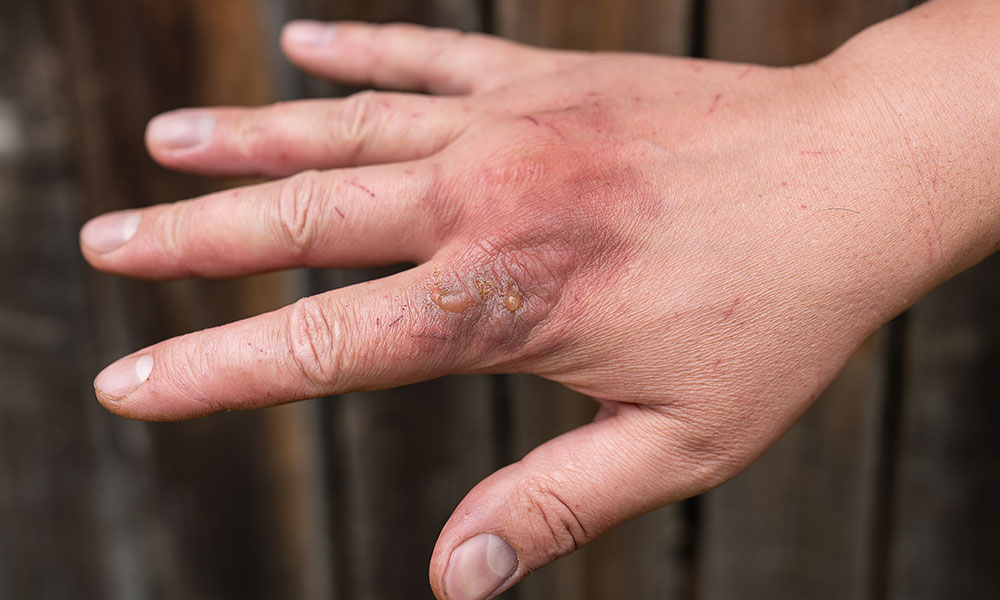
Skin damage is the most frequently reported and most severe consequence associated with the use of krokodil.
Common forms of skin damage associated with krokodil use include:
- Severe tissue damage
- Skin discoloration
- Swelling
- Open wounds
- Desquamation (shedding or peeling of the skin)
- Scarring
Wounds resulting from injection tend to heal slowly compared to those inflicted by other means. Ongoing drug use and subsequent repeated injection further complicate wound recovery by causing continued damage to nearby soft tissue.
Krokodil Drug Skin Lesions: Why They Develop
Krokodil drug skin lesions generally develop due to a combination of repeatedly injecting the drug and the corrosive properties of the impurities often found in the drug.
Repeatedly injecting drugs further damages local soft tissues each time, and over time, this leads to ulcerations, thrombophlebitis (veins becoming inflamed and clotted), and eventually necrosis if left untreated.[4]
Open wounds are also highly susceptible to secondary bacterial infections. Without immediate medical intervention, these infections may ultimately spread to gangrene (tissue death), requiring surgical removal. Due to how rapidly lesions can deteriorate when left untreated, wounds may ultimately necessitate advanced medical treatment, including surgery.
Get a Confidential Callback Now
To learn more about our New Jersey drug and alcohol treatment, contact us online or dial (888) 229-7989. We are available 24/7 to assist you. If you would like an immediate callback, fill out the form here.
Krokodil Drug Effects on the Face and Other Parts of the Body
Injection sites are generally found on the arms and legs; however, krokodil drug effects on the face can also be observed, particularly with facial infections or in cases where the drug has been injected near facial tissue.
In extreme conditions, soft tissue damage may occur, and in rare instances, bone may become involved, including osteomyelitis (bone infection) or osteonecrosis (death of bone tissue).[5]
On the arms and legs, circulatory complications like thrombosis (blood clots that block normal circulation) can develop alongside tissue damage, and in the most severe cases, extensive tissue and bone injury can lead to permanent loss of function or limb amputation.[6]
Other Short-Term and Long-Term Health Risks of Krokodil Abuse
Krokodil drug use has several additional serious health-related consequences beyond those directly attributed to the skin:
- Overdose. Opioids, similar to desomorphine (krokodil), pose a high risk for causing an overdose, which can be fatal without prompt treatment.
- Respiratory Depression. Desomorphine significantly decreases respiratory activity, and this risk increases with larger amounts of the drug or when combined with other central nervous system depressants.
- Bloodstream Infections. Injection drug use carries a risk of blood poisoning and other bloodstream infections, which can spread rapidly throughout the body.
- Organ damage. Toxic contaminants and repeated infections can contribute to organ damage over time, particularly affecting the liver and kidneys.
- Bone and muscle damage. Prolonged or severe drug use may lead to bone and muscle damage surrounding the area of drug injection.
- Mental Health Effects. Both psychological trauma and chronic opioid use may lead to an increase in depressive disorders and anxiety disorders.
- Increased risk of death. The cumulative risk of death from overdose, severe infection (such as meningitis or pneumonia), and complications from tissue damage related to krokodil is significantly greater than with many other substances.
Immediate medical attention is required to treat each complication. Delaying medical treatment allows infections and tissue damage to continue to deteriorate rapidly.
How Quickly Can Krokodil Cause Serious Health Problems?
Health problems caused by krokodil can happen quickly and progress just as fast, sometimes just days or weeks after using it regularly. The rate of deterioration of infections at injection sites can also increase dramatically if someone continues to inject with dirty needles and seeks no medical care.
Many factors influence how fast complications arise; however, even relatively short-term use has been shown to produce serious and frequently long-lasting or even life-changing health complications.
Can the Damage Caused by Krokodil Be Reversed?
There may be some improvement in complications if medical attention is received before the infection spreads. However, once there is extensive tissue loss, necrosis, or gangrene, it may be irreversible and may lead to amputation despite appropriate medical treatment.[7]
Treatment for complications typically consists of wound management, surgical excision of necrotic tissue, antibiotics for managing infections, skin grafting, and reconstructive surgery. Stopping drug use early provides the greatest opportunity for healing and minimizes the probability of irreversible damage.
Warning Signs That Require Immediate Medical Attention
Emergency medical services should be contacted immediately if the following symptoms are noticed:
- Rapidly worsening skin lesions, wounds, or infections
- Fever
- Severe pain
- Swelling
- Pus discharge from the injection site
- Difficulty breathing
- Altered mental status
- Any sign indicative of acute opioid overdose.
These symptoms can indicate rapid progression of infection, sepsis, or an acute overdose, all of which are emergencies that require immediate assessment by a qualified healthcare provider.
Begin Your Journey
The help you need is just a step away. Contact us today to learn more about our treatment options.
Treatment for Krokodil Addiction and its Medical Complications
Treating krokodil addiction typically starts with emergency medical care and wound management to treat the acute problems related to the physical injuries resulting from injecting this substance.
Detoxification is then the next step, and medications can be prescribed to assist in overcoming the underlying opioid dependency. Following detoxification, a patient would enter into an inpatient rehabilitation program, where they receive both behavioral therapy and continue their treatment for the addiction. Ongoing recovery support will also be necessary beyond the acute phase of the medical condition.
For many people, recovering from krokodil use requires not only physical recovery, but continued behavioral healthcare.
Recovery and Medical Care Can Save Lives
Krokodil use can result in severe medical conditions requiring immediate medical attention.
If you or someone you love is struggling with krokodil use or any other opioid, our compassionate staff at SOBA New Jersey can help connect you with comprehensive medical care and evidence-based treatment.
Reach out today. Our admissions team is standing by to answer your questions, verify your insurance, and help you guide you to your next step.
Frequently Asked Questions About Krokodil Drug Effects
Krokodil produces common opioid effects such as drowsiness and pain relief; however, the primary concern with krokodil is severe skin and tissue damage resulting from toxins produced during illegal manufacturing processes.
Skin damage primarily comes from corrosive chemicals used in illegal manufacturing, such as red phosphorus, iodine, and hydrochloric acid, which can remain in the product and potentially cause harm when injected.
Ulcers, necrotizing tissue loss, and other significant skin damage occur when repeatedly injecting drugs contaminated with illicit products.
Yes. Krokodil is a homemade variation of desomorphine, a semi-synthetic opioid created from codeine.
While some injuries can possibly heal if treated promptly, severe tissue loss may be permanent. Prompt treatment, consisting of adequate wound care and potential surgical interventions, offers the best likelihood of recovery.
Seek emergency medical assistance right away. Indicators of an overdose include trouble breathing, confusion or alteration in consciousness, deteriorating wounds, or fever. All require prompt evaluation.
Most krokodil use is reported in Russia and parts of Eastern Europe, especially Ukraine. Reports of krokodil use in the United States have been uncommon, though awareness of its risks remains an important part of opioid addiction education.
[1] [2] [3] Friedman, N. A., & Minns, A. (2023, January). Krokodil. California Poison Control System, University of California, San Francisco. https://calpoison.org/content/krokodil
[4] Haskin, A., Kim, N., & Aguh, C. (2016). A new drug with a nasty bite: A case of krokodil-induced skin necrosis in an intravenous drug user. JAAD Case Reports, 2(2), 174–176. https://pmc.ncbi.nlm.nih.gov/articles/PMC4864092/
[5] Sabeva, E., & Dochev, D. (2025). Necrotic lesions associated with desomorphine (“krokodil”) drug abuse: A systematic review. Journal of Oral & Maxillofacial Research, 16(1), e1. https://www.ejomr.org/JOMR/archives/2025/1/e1/v16n1e1ab.htm
[6] [7] Grund, J.-P. C., Latypov, A., & Harris, M. (2013). Breaking worse: The emergence of krokodil and excessive injuries among people who inject drugs in Eurasia. International Journal of Drug Policy, 24(4), 265–274. https://doi.org/10.1016/j.drugpo.2013.04.007