
 (888) 229-7989
  Client Portal
Blackout Drunk: Causes, Risks, and How To Prevent Alcohol Blackouts


Key Points
- Blackout drinking occurs when alcohol causes the brain to stop creating new memories for a short time, while the individual is still awake and alert.
- Most of the time, alcohol blackouts occur as a result of an increase in blood alcohol content (BAC).
- A blackout should not be confused with passing out or alcohol poisoning.
- Anybody who has had large amounts of alcohol may have experienced a blackout.
- To help minimize your chances of having a blackout, you should drink slower, eat prior to drinking, and avoid binge drinking.
If you’ve ever woken up in the morning after a night of drinking with no recollection of the night before, you are not alone.
Drinking to the point of blackout can be frightening, unpredictable, and leave you unsure of what to expect from the people you were with. It can also be a sign that your relationship with alcohol is something worth examining more closely. Understanding what exactly causes blackouts, the risks involved, and how to reduce your chances of experiencing one can help you make safer choices around alcohol and find help if it’s turning into something hard to control.
What Is Being “Blackout” Drunk?
A blackout happens when there’s a gap in a person’s memory about events experienced while intoxicated.[1] One who has had enough to be blackout drunk may appear normal while walking, talking, or interacting with others, but will have no memory of these events at a later time. This combination creates confusion for the people surrounding a person who has had a blackout, because there generally are few visible symptoms of this event occurring.
Typically, many do not know they blacked out until the morning following an evening of drinking. At this point, the individual attempts to reconstruct the events from the previous night; however, he or she finds large sections of time missing.
What can be confusing is the fact that for some people who are blackout drunk, they didn’t simply forget what happened: the memories were never recorded by the brain in the first place.[2]
How Alcohol Causes Blackouts
How Alcohol Disrupts Memory
Memory formation heavily relies on the hippocampus, a part of the brain that transforms recent experiences into long-lasting memories. Research shows that alcohol disrupts communication among brain cells in this region and prevents short-term memories from being stored as memories that can be recalled later.[3] Someone in the middle of a blackout can carry on a conversation, order food, or send coherent text messages. Short-term memory works fine for them to function, but the process that normally stores memories for future recall has been shut down.
Why Do People Black Out from Drinking?
Blackouts are more closely related to how quickly blood alcohol content (BAC) rises than to the total number of drinks consumed in a night.[4] Someone who drinks the same amount slowly over a longer time is less likely to black out compared to someone who drinks it quickly within a short time window.
Drinking games and chugging pose particular risks because they raise BAC very quickly and overwhelm the brain’s ability to form memories at the same time.[5]
Major Risk Factors
There are many variables to consider when trying to determine whether a person will have a blackout, including:
- How quickly they drink
- How much alcohol is in the drinks they consume
- Whether they consume alcohol on an empty stomach
- Whether they drink one type of higher-proof alcohol at one time vs. several types of alcohol over a longer period of time
- Mixing alcohol with certain medications
Mixing alcohol with prescription medication increases your risk for blackouts.[6] Medications that slow down central nervous system activity such as benzodiazepines, sleep aids, and opioids can lower the threshold for someone to enter a state of amnesia and increase their chance of having a blackout.[7]
Some biological characteristics can also contribute to an increased likelihood of having a blackout, including:
- Gender
- Body composition
- Genetic predisposition
- Amount of previous exposure to drinking
- Age
- Metabolism
Get a Confidential Callback Now
To learn more about our New Jersey drug and alcohol treatment, contact us online or dial (888) 229-7989. We are available 24/7 to assist you. If you would like an immediate callback, fill out the form here.
Types of Blackouts
Fragmentary Blackout or Brownout
A fragmentary blackout is the most common type of blackout. In a fragmentary blackout, some, but not all, of your memories are lost.[8] Fragments of the evening may surface at a later time, particularly if someone brings it to your attention by way of a photograph or mentioning something that sparks a memory of the previous night.
En Bloc Blackout
An “en bloc” blackout results in an almost total loss of memory for an entire period.[9] Those memories are typically irretrievable, regardless of the number of cues you receive as reminders. An en bloc blackout is often linked to a high BAC.[10]
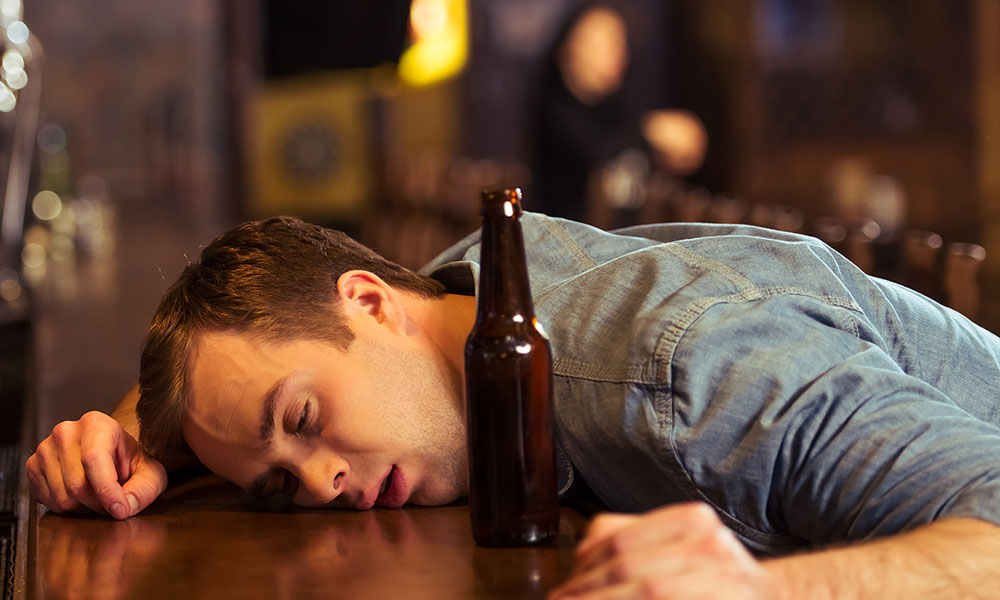
Blackout Drunk vs. Passed Out vs. Alcohol Poisoning
| Blackout Drunk | Passed Out | Alcohol Poisoning |
| Awake | Unconscious | Medical emergency |
| Can talk and move | Cannot respond | May have slowed breathing, seizures, bluish color, vomiting, and inability to wake |
| Cannot form memories | Sleeping or unconscious | Requires immediate emergency care |
Someone who is blackout drunk can still make decisions, walk, drive, or have conversations, even though they won’t remember any of it later.
How Do I Know I’m About to Black Out From Drinking?
The earliest signs of a full-blown blackout are:
- Someone drinking heavily
- Appearing intoxicated
- Losing track of their conversation
- Repeating themselves when asked questions
- Acting strangely toward friends or others
- Difficulty understanding and continuing to follow along in a conversation
- Poor coordination of physical actions
- Memory lapses starting to develop (though they may seem minor)
Many people do not recognize early signs of a potential blackout while in the midst of drinking. This often happens because alcohol also impairs executive function, the processes related to self-regulation, and decision-making.[11]
Risks and Consequences of Blackouts and Drinking
The risks associated with blacking out from too much drinking are both dangerous and serious.
Physical Risks
There is risk for falls (and injuries), automobile accidents, drowning, and alcohol poisoning when you consume excessive amounts of alcoholic beverages.[12]
Social Risks
When you have a blackout, it’s possible you may do something embarrassing or harmful, damage relationships, or experience anxiety (known as “hangxiety”) due to what happened while you were drunk, or feel ashamed or depressed about your behavior and loss of control.
Other Safety Risks
There are also many safety risks involved with blackouts. Alcohol blackouts are linked to sexual assault, drunk driving, legal problems, and financial repercussions, all of which can happen during an episode, only for you to discover later.[13]
Does Blacking Out Mean You Have an Alcohol Problem?
While one episode of blackout is not indicative of alcohol use disorder (AUD), multiple episodes of blackout may be indicative of dangerous or abusive drinking behaviors. It is common for healthcare providers to examine a person’s drinking behavior on a long-term basis rather than analyzing a single incident.[14]
If you find that blackouts have become frequent occurrences, take an honest look at your drinking and schedule an appointment with your primary physician. Discussing these issues early can potentially lead to identifying and changing problematic behaviors before they become more serious.
How Can Alcohol Blackouts Be Prevented?
Prevention checklist:
- Know your personal limits
- Eat before drinking
- Pace your drinking
- Avoid binge drinking
- Alternate alcohol with water
- Avoid mixing alcohol with drugs or medications
- Stay with trusted friends
- Never drink and drive
Begin Your Journey
The help you need is just a step away. Contact us today to learn more about our treatment options.
What Should You Do When Someone in Your Group Becomes Blackout Drunk?
When you see someone who is blacked-out intoxicated, be sure to keep an eye on that person so they don’t get into hazardous areas or situations (e.g., near streets, water, or stairs). Also, watch for early symptoms of alcohol poisoning, because some are similar at first; however, their treatments vary dramatically.[15]
Call 911 immediately if the person exhibits the following:
- They are unable to awaken.
- Their normal breathing stops, or they show obvious signs of respiratory depression
- Seizures
- Vomit occurs while the person is unconscious.
- The person’s skin color changes to a bluish tint or appears pale.
- They are extremely difficult to arouse.
A blackout alone is not a medical emergency, but any of the above symptoms mean it is.
When To Seek Help For Blackout Drinking
You need to seek help from an addiction professional when someone is having repeat blackouts. You should also seek help when you need more and more alcohol to get drunk; you have lost control of your drinking and can’t stop once you start; your blackouts are impacting your job or relationship; or you continue to drink even though it has been causing you harm, as these signs may indicate an alcohol use disorder.[16]
Treatment options include:
- Medical Evaluation
- Outpatient Treatment
- Therapy
- Support Groups
- Residential Treatment/Inpatient Treatment (for serious cases)
- Medically Assisted Detoxification (MAT, in which a doctor monitors the patient during withdrawal and helps alleviate withdrawal symptoms with medications and other treatments).
Treatment for Alcohol Addiction
Alcohol-induced blackouts indicate that someone’s brain functions have been severely disrupted by alcohol consumption, regardless of how the person may appear during these episodes.
Blackout frequency is directly associated with an increased risk of injury, sexual assault, accidents, and alcohol poisoning. An individual should seek professional assistance if they find themselves experiencing increasing frequency of blackouts, or if it becomes increasingly difficult for them to regain consciousness after a drinking episode, as this will help reduce their risk of severe injury or death — ultimately resulting in a higher level of overall long-term physical and mental wellness.
Don’t wait until a blackout leads to irreversible harm. If you are finding yourself unable to stop drinking once you start or have had multiple blackout episodes recently, a talk with a professional is warranted. Reach out to SOBA NJ and speak to one of our admissions specialists to learn more about what treatment could look like for you.
Frequently Asked Questions About Alcohol Blackouts
There is no set amount of drinks associated with a “blackout.” Body weight, gender, amount of food eaten before drinking, metabolic rate, medication, and how quickly you drink all influence how fast your blood alcohol content (BAC) rises, and how your brain reacts.
The length of time a blackout lasts depends on when BAC levels drop to a point where new memories can be formed. This time period may vary from just a few minutes to many hours, depending on how much was consumed prior to the blackout.
Sometimes people retain fragmented memories that resurface based on recollections from friends or from reviewing photographs taken while they were drinking. In most cases, en bloc (all at once) blackouts result in no recall of events, since the person simply did not create memories for those events.
No. A person who is in a blackout continues to be awake and able to talk and walk, but cannot create new memories. If someone passes out due to excessive amounts of alcohol, they lose consciousness.
[1] [2] [3] [4] [5] [8] [9] [10] [11] National Institute on Alcohol Abuse and Alcoholism. (n.d.). Interrupted memories: Alcohol-induced blackouts. National Institutes of Health. https://www.niaaa.nih.gov/publications/brochures-and-fact-sheets/interrupted-memories-alcohol-induced-blackouts
[6] [7] National Institute on Alcohol Abuse and Alcoholism. (n.d.). Alcohol-medication interactions: Potentially dangerous mixes. National Institutes of Health. https://www.niaaa.nih.gov/health-professionals-communities/core-resource-on-alcohol/alcohol-medication-interactions-potentially-dangerous-mixes
[12] [13] Centers for Disease Control and Prevention. (2025, January 14). Alcohol use and your health. https://www.cdc.gov/alcohol/about-alcohol-use/index.html
[14] [16] National Institute on Alcohol Abuse and Alcoholism. (n.d.). Alcohol use disorder: From risk to diagnosis to recovery. National Institutes of Health. https://www.niaaa.nih.gov/health-professionals-communities/core-resource-on-alcohol/alcohol-use-disorder-risk-diagnosis-recovery
[15] National Institute on Alcohol Abuse and Alcoholism. (n.d.). Understanding the dangers of alcohol overdose. National Institutes of Health. https://www.niaaa.nih.gov/publications/brochures-and-fact-sheets/understanding-dangers-of-alcohol-overdose